
Rediscovering Health: The Modern Relevance of Ancient Chakra Wisdom
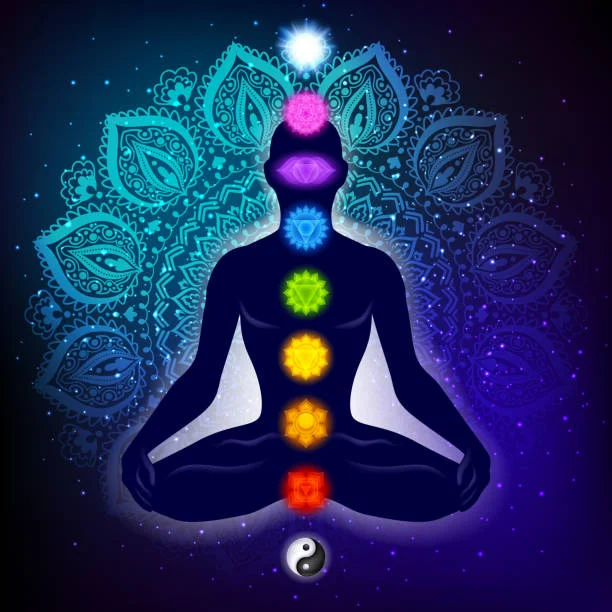
In today’s fast-paced, technology-driven world, optimal health may not be solely found in modern medicine but also in the ancient wisdom of traditional healing systems. One such profound system is the concept of chakras—energy centers that have guided holistic healing practices for millennia. While chakras might initially seem abstract or mystical, modern science is increasingly uncovering their significance, revealing a compelling connection between these energy hubs and our physical, emotional, and spiritual well-being. Ancient Healing for Modern Times The chakra system, often referred to as ‘wheels of light’1, has been a cornerstone of Eastern healing practices such as Ayurveda and Yoga for thousands of years2. This system comprises seven energy centers aligned along the spinal column, each crucial for regulating the flow of life force energy. Chakras are thought to act as intermediaries, transforming energy between physical, astral, and causal dimensions into forms usable by the body and by managing this vital energy, chakras influence our physical health, emotional well-being, and spiritual growth. Chakras are viewed as the organs of the subtle body and are intricately connected to the body’s energy channels, or ‘nadis’. These nadis parallel the meridians in Chinese medicine and align with major acupuncture points in Traditional Chinese Medicine. The concept of energy centers extends beyond these systems, appearing in diverse traditions such as Tibetan Buddhism3, Sufism4, and Western esoteric practices5. These energy centers are thought to absorb and process universal energy (such as ‘Qi’ or ‘Prana’) and channel it through nadis to the nervous system and endocrine glands affecting bodily functions and hormonal balance. Therefore understanding these energy centers might be crucial in understanding how to harness life force, maintain overall health, and achieve spiritual development, as each of the seven major chakras are often linked to specific physiological functions and psychological states, with disruptions often manifesting as related psychological issues. The Seven Major Chakras: An Overview While ancient wisdom emphasizes the spiritual dimensions of chakras, scientific exploration seeks to bridge this with anatomical understanding. An integration of the two perspectives will be essential to fully grasp how subtle energy could affect chakra function and overall health. The Scientific Perspective: Bridging the Gap Scientific research has provided foundational evidence supporting the existence of chakras and their role in regulating brain functions and influencing health. Studies by pioneers like Hiroshi Motoyama used an AMI device, which utilized electrodes to measure energy flow in the body’s meridians, providing insights into chakra activity based on electrical properties linked to nerve plexuses and endocrine glands12. Similarly, bioelectrography and Gas Discharge Visualisation techniques, developed by Konstantin Korotkov, captured corona discharges and photon emissions to visualise and analyse the energy fields surrounding the body13,14, 15. However, the most profound study seems to be a study16 conducted by UCLA Professor Valerie Hunt which used scientifically accepted methods to analyze subtle energy emissions from various chakras and the body’s energy field, or aura. This study was among the first to validate subjective observations of aura colors with objective electronic measurements. Researchers used electrodes placed on major chakra and acupuncture points during Rolfing sessions to detect low-level electrical signals. At the same time, aura reader Rev. Rosalyn Bruyere provided real-time verbal reports on the color, size, and movement of energy in the chakras and auric fields. The study combined these observations with electronic data, analysed using Fourier and sonogram analysis, to link physical, emotional, and spiritual states to specific chakra activities, colors, and frequency shifts. The alignment between Bruyere’s perceptions and the electronic measurements reinforced the study’s accuracy. The findings supported the traditional perspective that experiences and memories can be stored in body tissue17 and their associated colors to particular states: Red to pain, Orange to emotional release, Yellow to intellectual effort, Blue to calmness, Violet-Pink to spiritual and empathetic states, and White to spiritual experiences. Notably, a progression of energy flow from red to yellow, then blue, and white, was observed, potentially reflecting a rising kundalini – which is said to be an awakening of a transformative spiritual energy. Integrating Ancient Wisdom with Modern Science solution To fully harness the potential of the subtle energy system, science must continue evolving to bridge the gap between empirical research and ancient wisdom. While foundational evidence for chakras has been established, there is a need for a holistic, quantum-based model that reflects the atomic and cellular nature of the body. Such a model would integrate both biological and spiritual perspectives, creating a new paradigm that unites science and spirituality. In my practice, I consistently observe remarkable results using this integrative approach, which involves unblocking stored emotions in the body’s subtle energy system—both physically and through the subconscious—to facilitate a greater influx of vital energy. For example one patient who was unfamiliar with chakras reported seeing sequential colors in their mind’s eye from red to white, in the order of the chakras, as she experienced improved mental clarity and emotional stability whilst another started visualising a past life which provided her an explanation of a current predicament. I am confident that advancing our understanding of subtle energy through this integrative approach will unlock new frontiers in health and consciousness, validating ancient wisdom through modern scientific inquiry. As we continue to explore and embrace these methods, we move closer to a future where such approaches are widely recognised and scientifically validated. References